
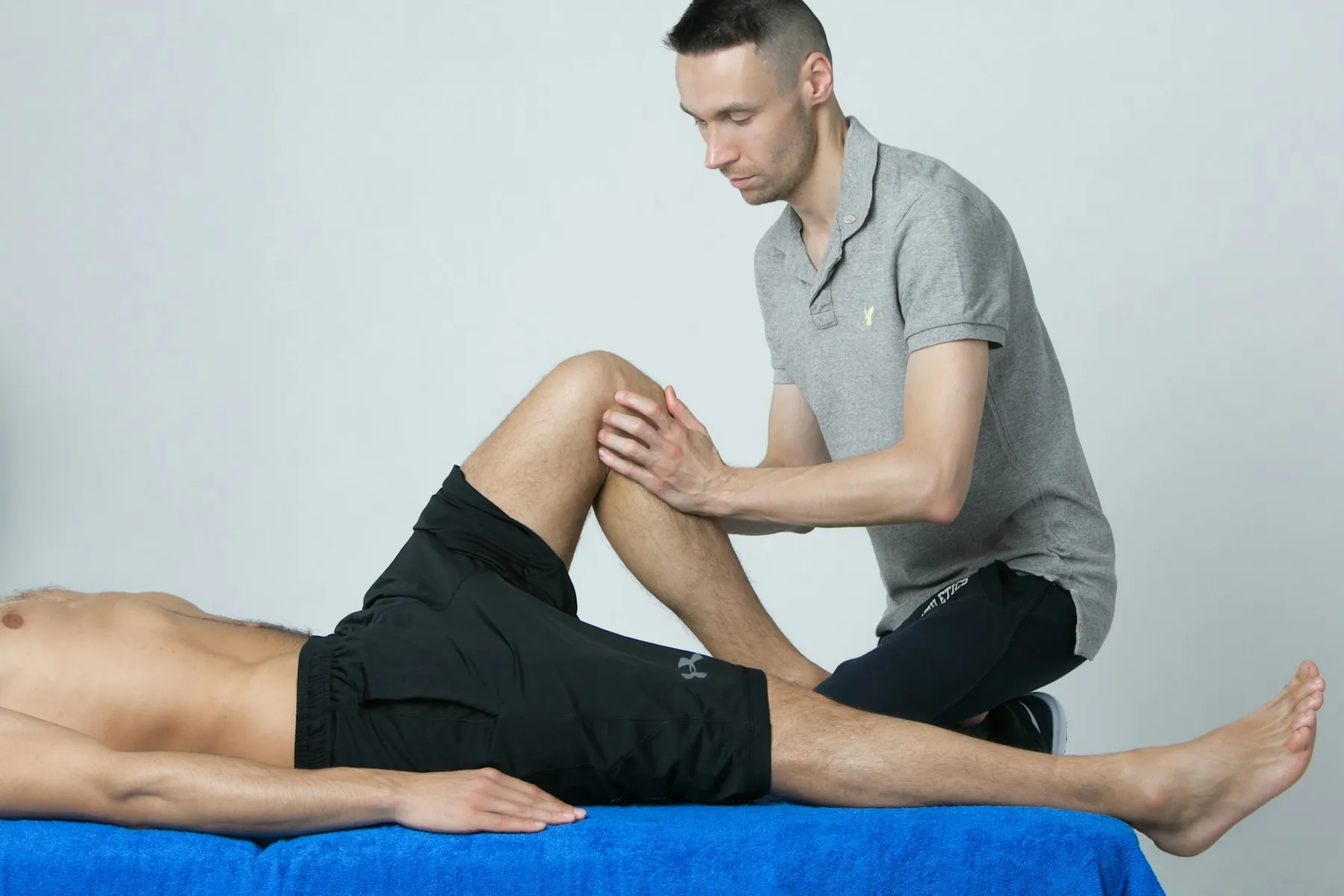
Joint injections in McKinney at Evoke 5 start with an idea from prolotherapy: a joint is only as strong as its weakest ligament. That’s why a steroid shot or another round of rest can quiet a joint for a few weeks and still leave the same pain waiting after your next long walk or round of golf. The sore spot is often downstream of the structure that failed.
Who this is for
- Knee osteoarthritis that limits stairs, golf, travel or sleep
- Tendon pain that won’t settle, like tennis elbow, rotator cuff or plantar fascia, especially after a steroid shot wore off
- A joint that feels loose, like an ankle that keeps spraining
A shot is not a shot
| Injection | What it does | Best used when |
|---|---|---|
| Corticosteroid | Quiets inflammation; can weaken collagen if repeated | A hot, short-lived flare |
| Dextrose prolotherapy | Signals the tissue to repair | Unstable joints, chronic tendon pain, selected arthritis |
| PRP | Concentrates your own growth factors | Selected tendon and joint problems |
| Perineural dextrose | Calms a sensitized nerve | Nerve-driven pain |
How a course works
Prolotherapy uses a concentrated dextrose (sugar) solution where ligaments and tendons attach, prompting new collagen over several weeks. Visits are three to six weeks apart, usually three to six sessions, then a reassessment. Between visits, the plan rebuilds capacity with progressive loading, sleep and enough protein, because a calorie-deficit diet quietly stalls repair.
The honest version
The evidence is strongest for knee osteoarthritis. The 2019 American College of Rheumatology guideline conditionally recommended against prolotherapy, which reflects a real disagreement about trial quality. You’ll hear where the data are solid.
At the consult
You’ll leave with a named diagnosis and a recommendation: prolotherapy, PRP, a nerve-directed injection, more testing, or no injection. Bring your imaging reports and prior injection history.